|
| |
Other Great Books Programs
ere is a list of "great books" programs located in colleges and universities. Wherever possible I have tried to add a brief description for each program from their web pages.
Colleges and Universities That Have Some Form of Great Books Program
Canada
- Brock University, St. Catharines, Ontario
- Great Books / Liberal Studies Program
- Great Books / Liberal Studies Program provides an opportunity for the exploration and discussion of those questions which arise when education is directed towards the freedom of the fully examined life.
The focus of the Great Books / Liberal Studies Program is the Great Books Seminar which meets, under the guidance of two faculty leaders, twice weekly, throughout the entire program. Leaders for this seminar are drawn from a variety of disciplines and faculties of the University.
- The Books They Read
- Great Books Quiz
- Carleton University, Ottawa, Ontario
- College of the Humanities
- Founded in 1995, the College of the Humanities is a unique community in Canada committed to the study of great achievements of civilizations in a collegiate setting. The College brings together Carleton University's accomplished scholars, enriching courses, and the highest commitment to academic excellence. With in its own precinct at Carleton University, the College fosters sustained cultural and academic opportunities in Seminar, Commons, and Reading Rooms. Offering a challenging and rich curriculum focused on history, literature, philosophy, and languages, the College provides students with a rigorous liberal education encouraging thoughtful reflection, the exercise of imagination, and informed criticism.
- Concordia University, Montreal, Quebec
- Liberal Arts College
- Concordia University's Liberal Arts College remains unique in this country. The LAC program aims to give students an unparalleled overview of the Western intellectual tradition. Although there are important excursions into such areas as music and the visual arts, it remains fundamentally a great-books program. In addition to the unusual seminar format, the interdisciplinary nature of LAC courses sets them apart from normal undergraduate offerings.
- Course List and Syllabi
- Malaspina University, Nanaimo, British Columbia
- The Liberal
Studies Program
- The Liberal Studies program aims to provide, within the framework of
an established learning community, a sound general education of lasting
value for people who will be active participants in contemporary society.
Consequently, the courses in the core of the program focus on two
interrelated goals: critical skills and integrated general education.
- Core Reading List
- University of King's College, Halifax, Nova Scotia
- Foundation Year Programme
- Instead of a first year made up of several classes taken in separate departments of the University, students in the FYP are involved in a single, challenging course which looks at various subjects together. The Foundation Year is not a Philosophy course or a History or English course, or a "subject" course at all. The FYP looks at those three subjects and more, giving students a chance to see how different ideas and approaches fit together without making the usual subject divisions. Beginning with the ancient Greeks and ending with texts written in the 1990's, students read a wide variety of material and study many of the major works of western civilization. Foundation Year students, then, do not read books about (for example) the Ancient World or the Enlightenment. They read works written by people living in those periods, and so are challenged to think about who those people were, how they saw the world in which they lived--and how their thinking and writing might help us to understand our world now, at the end of the twentieth century.
- FYP Reading List
United States
- Biola University, La Mirada, California
- Torrey Honors Institute
- Torrey is a two-year program in the liberal arts for undergraduates at
Biola University. It is dedicated to forming leaders through study of
the master works of Western civilization, with a special emphasis on
Christian texts. A focus on first-rate Christian thinkers in the
Protestant tradition, in addition to extensive study of the Bible, makes
Torrey unique in the area of classical education.
- Torrey Texts and Resources
- Boston University, Boston, Massachuesetts
- Core Curriculum
- Boston University's Core Curriculum is designed for students who place a high value on liberal education, intellectual friendship, and close contact with faculty. It is a wide-ranging interdisciplinary program based on the classics of the humanities and social sciences and the important ideas, methods, and discoveries of the natural sciences. Core concentrates on what the greatest works of mankind throughout the ages have to say to us here, right now. Its goal is the empowerment of the mind and the sharpening of what Confucius calls human-heartedness. Core students study classics of the Western and Eastern traditions in small classes taught by full-time faculty. The focus is on discussion, understanding, and the development of critical thinking and writing skills. These discussion classes, the heart of the program, are supplemented by a lecture series delivered by many of the University's most outstanding scholars and teachers. Enrollment in the Core is voluntary. Core courses fit with any major. The program is one of two ways of fulfilling the College's General Education requirement, the other being the Divisional Studies option described in the University Bulletin. The Core is open to all students in the College of Arts and Sciences. All Core courses may be taken for honors by students invited into the Honors Program.
- Core Courses
- Central Washington University, Ellensburg, Washington
- The William O. Douglas Honors College
- The Douglas Honors College, a division of Central Washington University, was founded in 1977 to serve academically talented students. Its goal is the pursuit of excellence in university education through basic studies in the liberal arts and sciences, a four-year course of study of the Great Books of western civilization and specialized study in a major discipline.
- Reading List
- The College of Saint Thomas More, Fort Worth, Texas
- Founded in 1981, the College offers a single curriculum based upon the great texts of western civilization and formed by the classical disciplines of Theology, Philosophy, Literature, Mathematics, and History, and by the study of the Classical Languages, Greek and Latin.
Our curriculum has formed the basis for higher education since the inception of colleges, and it has proven its mettle through the centuries. Our students graduate with a tradition of thought and ideas that cuts across disciplines, an attribute that appeals to job recruiters and is extremely important in graduate schools, especially law and business.
- College Book List
- Columbia College,
Columbia University, New York, New York
- Literature
Humanities
- Formally known as "Masterpieces of Western Literature and Philosophy,"
this year long course was organized in 1937 to complement the Contemporary
Civilization course. Popularly known as "Literature Humanities," it
offers Columbia College students the opportunity to engage in intensive
study and discussion of some of the most significant texts of Western
culture. The course is not a survey, but a series of careful readings of
texts that reward both first encounters and long study. Discussion may
take into account historical and cultural context, but the main focus is
the reading itself. Whether classwork focuses on the significance of the
text in its own time or on what it has to offer today, the objective is to
provoke speculation about and yield ins ight into particular textual
conceptions of humanity and their place in the development of critical
thought.
- Gutenberg College, Eugene, Oregon
- Gutenberg College in Eugene, Oregon, is a four-year college providing
a broad-based liberal arts education in a Protestant Christian
environment. Its "great books" curriculum emphasizes the development of
basic learning skills (reading, writing, mathe matics, and critical
thinking) and the application of these skills to profound writings of the
past.
- Kentucky State University , Frankfort, Kentucky
- Honor's Program of Whitney Young College of Leadership Studies
- The Honors Program is an integrated liberal arts program that emphasizes student discussion of excellent books. Students may pursue a full major or minor in Liberal Studies with the Honors Program, or complete only the core requirement of general studies courses with the Honors Program and then go on to major in any field of their choosing. The Honors Program features small classes with fifteen or fewer students, a challenging interdisciplinary curriculum with multicultural components, a faculty devoted to undergraduate education, and a community spirit among faculty and students. It also offers scholarships, opportunities for travel abroad, paid internships, and participation in state, regional and national honors conferences.
- Great Books List
- Lawrence University, Appleton, Wisconsin
- Freshman Studies
- Freshman Studies represents in microcosm the fundamental character of liberal learning. The course introduces students to ideas of abiding concern; it probes the nature of knowledge; and it cultivates the skills of analysis and expression essential to educated discourse. Most important, Freshman Studies builds intellectual foundations that serve Lawrence students during their college years and beyond. Great books, ground-breaking scientific formulations, and enduring works of art--the defining achievements of culture and civilization--stand at the center of Freshman Studies. Course readings and materials emphasize the Western heritage, in particular, the diversity of conception within that heritage; but they also include select classics from non-Western civilizations. Through the careful examination of these works, students and faculty engage such issues as the nature of authority, the meaning and exercise of freedom, the importance of individual responsibility, the attainability of social order, the discernment of good and evil, and the character of scientific inquiry--issues at once timeless and immediate.
- Freshman Studies Reading List
- Lynchburg College, Lynchburg, Virginia
- Lynchburg College Symposium Readings Program
- Their mission is to foster interdisciplinary study by all students to read from the classics and write, and to speak about them in the context of contemporary society throughout their four years at Lynchburg College. Further, we aim to work in partnership with our students, both inside and outside the classroom and to encourage them to take responsibility for their learning. Finally the Program seeks to create an atmosphere of shared learning within the college and beyond, therein fostering an academic climate conducive to teaching and learning.
- Symposium Readings
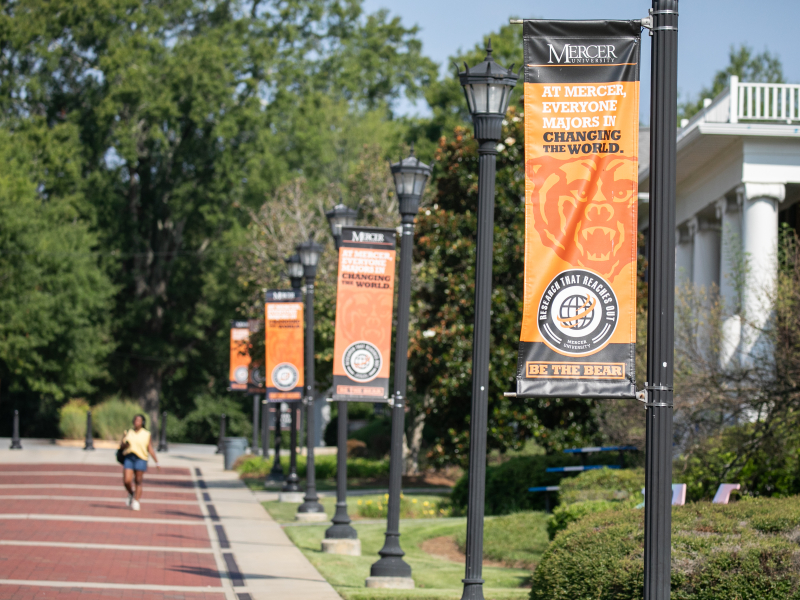
- Mercer University, Macon, Georgia
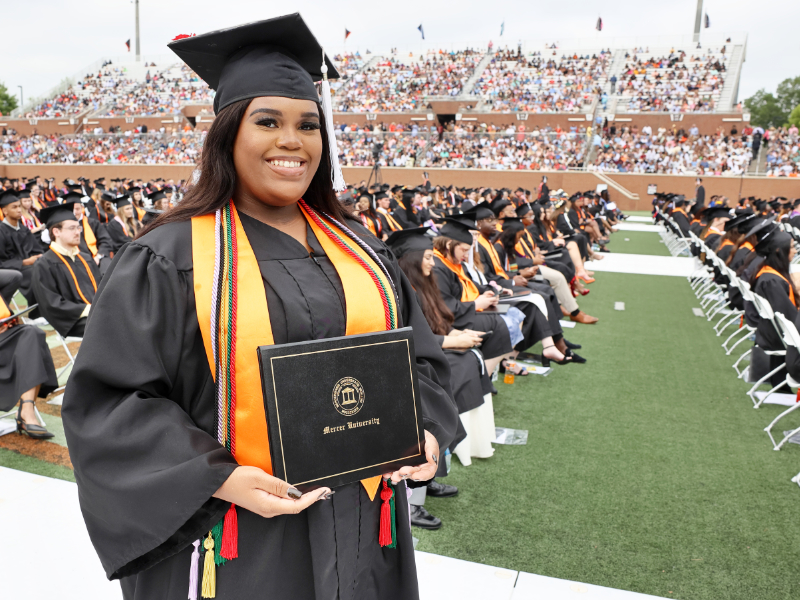
- The Great Books
Program
- The Great Books curriculum of nine courses is one of two General
Education tracks in the College of Liberal Arts. The faculty of the
College believes that careful study in the primary texts of Western
thought and belief, guided by committed and rigorous instructors, is a
valid means to a good general education.
Through this survey of political, religious, philosophical, and
scientific thought, students can increase their skills in disciplined
thinking and effective writing, can heighten their moral and ethical
reflectiveness, and can understand how the seminal ideas of the past have
formed our twentieth and twenty-first century selves. The Great Books
thus can provide both a ground and a goal for the specialized disciplines
in which students major.
- Great Books
Curriculum
- Northwestern State University of Louisiana, Natchitoches, Louisiana
- Louisiana Scholars' College
- The Louisiana Scholars' College offers highly motivated students an
honors liberal arts education that centers on independent thinking and
lively debate. This Great Books program starts with the ancient texts and
moves forward to the modern in a series of classes devoted to great works
and significant ideas that have shaped our world.
- Rose Hill College, Aiken,
South Carolina
- Three principles guide instruction at Rose Hill College: that
education is for the whole human being and not only the mind, that it
should not be limited to formal classes but must embrace every aspect of
life, and that at its best it involves teachers and students working and
learning together in an atmosphere of collegiality and mutual respect.
Putting these principles into practice means that classes are always
small, taking the form of tutorials and seminars instead of lectures, and
that the emphasis is placed upon active inquiry into principles, not the
passive collection of facts. Every course includes a close reading of
classic primary texts, and students are encouraged to think and write
across the boundaries which often artificially divide academic
disciplines. Ample opportunities are provided for on-going conversation
and reflection.
- Freshman Year
- Sophomore Year
- Junior Year
- Senior Year
- Saint Anselm College, Manchester, New Hampshire
- The Liberal
Studies in the Great Books Program
- The Liberal Studies in the Great Books Program, administered by the
Philosophy Department, aims to bring about a fully integrated liberal
education. Through the study of great works in the arts, literature,
philosophy, science, and theology of Western Civilization, the program
challenges students to seek out what is true, what is good, and what is
beautiful, so that they may become wiser and better human beings. The
program engages the abilities to think clearly, to write well, and to
communicate persuasively. When developed, these abilities are applicable
to a wide range of career options within the social, economic, and
political world into which the student graduates.
- St. John's College
[MD], Annapolis, Maryland
- St. John's College believes that the way to a liberal education lies
through a direct and sustained confrontation with the books in which the
greatest minds of our civilization have expressed themselves, and through
rigorous exercise in translation, mathematical demonstration, music
analysis, and laboratory science. To that end, the College offers a
four-year, nonelective program in which students read, discuss, and write
about the seminal works that have shaped the world in which we live.
- List of Program
Readings
- St. John's College
[NM], Santa Fe, New Mexico
- St. John's College maintains that the way to a liberal education lies
through a direct and sustained confrontation with the books in which the
greatest minds of our civilization have expressed themselves, and through
rigorous exercise in translation, mathematical demonstration, music
analysis, and laboratory science. To that end, the college offers a four
year, nonelective program in which students read, discuss, and write about
the seminal works that have shaped the world in which we live.
- Freshman Seminar list
- Sophomore Seminar
list
- Junior Seminar list
- Senior Seminar list
- Partial Tutorial
list
- Eastern Classics Curriculum
- The Graduate Institute at St. John's College, Annapolis, Maryland and Santa Fe, New Mexico
- The Graduate Institute at St. John's College offers a Master of Arts in Liberal Arts degree for four terms of interdisciplinary study. The program, modeled on that of the undergraduate college, has two distinctive features: the curriculum consists exclusively of classic or "great" books of the Western tradition used as texts, and all classes are conducted as small-group discussions. The program consists of five segments: literature, politics and society, philosophy and theology, mathematics and natural science, and history. Students must complete four of the five segments to earn the degree. Designed with a schedule that can accommodate full-time students or those who work part-time or full-time, the Graduate Institute meets in the late afternoon and evening during the fall and spring terms and also during an intensive summer term. Students may attend either the Annapolis or Santa Fe campus for one or more of the segments. Each segment consists of a seminar, a tutorial, and a preceptorial. All classes are discussions, with one or two tutors and 8 to 20 students working together. The Graduate Institute also offers a Master of Arts in Eastern Classics on the Santa Fe campus.
- Saint Mary's College of California, Moraga, California
- Integral Liberal Arts Program
- For fifty years, Saint Mary's College of California has supported "a
college within a college." For the last forty years, faculty exchanges
and friendships have more closely aligned the Saint Mary's College
Integral Program with the "New Program" at the two St. John's colleges
at Annapolis and at Santa Fe. Our college's 4-1-4 calendar along with
many programs in the larger college around us add a local flavor to the
common task.
- Integral Liberal Arts Texts
- Saint Olaf College, Northfield, Minnesota
- The Great Conversation
- An integrated sequence of five courses taken over two years, the
Great Conversation introduces students to the major epochs of Western
tradition through direct encounter with significant works. Beginning with
the ancient Greeks and Hebrews, the program traces the development of
literary and artistic expression, philosophic thought, religious belief,
and historical reflections on western culture into the modern world.
Students respond to great works, challenging the ideas expressed in them
and challenging their own ideas as well, thus joining the conversation of
men and women through the ages about the perennial issues of human life.
The Great Conversation is open to students of all interests. This program
appeals to those who like to read, discuss, and write about ideas; those
who believe that learning about the past is profoundly relevant to
understanding the present; those who want to examine the Western
tradition in a unified way, and those who believe that an education ought
to cultivate discriminating minds, inquisitive spirits, and moral
sensitivity.
- Seaver College, Pepperdine University, Malibu, California
- Humanities/Teacher Education Division
- The Great Books Colloquium is a four-course sequence on masterpieces
of Weatern civilization, designed to engage students in close, critical
reading and small-group discussions of selected works from the time of the
Greeks to the modern day. Great Bo oks is a limited-enrollment program
that requires a strong commitment of time and effort in reading and
composition.
- Shimer College, Waukegan, Illinois
- Shimer College is a small, four-year, private liberal arts college
located in Waukegan, Illinois. Shimer uses all original source
readings, rather than textbooks. Shimer classes are never more
than 12 students in size, guided by a faculty member, who is an
active participant in the learning process. Shimer uses a core
curriculum to give students a strong background in the humanities,
social sciences, and natural sciences.
- Reading List
- Southern Virginia College, Buena Vista, Virginia
- Southern Virginia offers a comprehensive liberal arts education based on the Great Books that constitute the foundation of western civilization. The classes have a seminar format designed to inculcate critical thinking as well as improve writing skills and computer literacy. Classes develop the analytical and problem solving skills that are crucial for leaders of the information age.
- Temple University, Philadelphia, Pennsylvania
- Intellectual Heritage Program
- The Intellectual Heritage Program at Temple University began in 1979 as part of a group of foundation courses required exclusively for students in the College of Arts and Sciences. The program was designed to acquaint students with the great books of the Western intellectual tradition, from the Greeks to the modern era.
In 1986 Intellectual Heritage became a requirement for matriculated students in all 11 of Temple University's undergraduate schools and colleges. Meanwhile, IH has added texts that represent important science and non-Western texts which have challenged or helped to change the shape of Western thought. Thus, students across the University read primary texts, whenever possible whole and complete instead of excerpted.
Intellectual Heritage is a two-course sequence which focuses upon the laws and disciplines upon which nations and their institutions have been built, and upon the values of leadership and personal integrity that support Western cultural and social accomplishments. The courses are part of the University's Core Curriculum, a set of course credits in eight distributed areas: Intellectual Heritage, Composition, American Culture, The Arts, The Individual and Society, Foreign Language International Studies, Mathematics/Statistics/Logic, and Science and Technology.
- IH Syllabus
- Thomas Aquinas College,
Santa Paula, California
- Thomas Aquinas College's program of liberal education is unique in
American education. There are no majors or minors, no electives, no
specializations. The College aims at providing its students with a
thorough grounding in the course of studies is based on the original works
of the best, most influential authors, poets, scientists, mathematicians,
philosophers and theologians of Western civilization. In every classroom,
the primary teachers are the authors of the ``Great Books'' from
Aristotle, Homer and Euclid to St. Thomas Aquinas, T. S. Eliot and Albert
Einstein.
- Course of
Study
- The University of
Chicago Center for Continuing Studies, Chicago, Illinois
- The Basic Program
of Liberal Education for Adults
- The Basic Program of Liberal Education for Adults is a non-credit
program in which like-minded individuals collaboratively explore some of
the great textual treasures of the Western tradition. Although each
discussion-format class is led by an experienced and knowledgeable
instructor, the emphasis is squarely on the students. The regular
curriculum consists of a four-year sequence of readings carefully designed
to provide the student with both breadth and depth.
- Reading
List
- College of Arts and Sciences, University of North Texas, Denton, Texas
- Academic
Core Programs--Great Books
- This program is part of their Academic Core Programs. The Great Books
Program is a nine-hour block of courses in three subjects. The class will
be taught by professors from three departments, all of whom will be in the
class as it meets. Instead of using an anthology for your textbook, you
will be reading some two dozen of the most influential writers of western
civilization: Hesiod, Gilgamesh, Homer, Thucydides, Plato, Virgil, Livy,
Ovid, Chaucer, Machiavelli, Shakespeare, Cervantes, Descartes, Newton,
Goethe, Dostoyevsky, Nietzsche, Kafka -- and others.
- University of Notre Dame, South
Bend, Indiana
- The Program of Liberal Studies
- The Program of Liberal Studies is a three-year, prescribed sequence
of seminars and specialized courses (tutorials) anchored in the Western
and Catholic traditions. Its course of studies leads to the degree of
Bachelor of Arts. Established in the fall of l950, the Program was
founded at Notre Dame as part of the Great Books movement which had begun
at Columbia University in the l920s, extended to the University of
Chicago in the l930s under the presidency of Robert M. Hutchins, and
subsequently produced a group of related curricular programs at St.
John's College (Annapolis, Santa Fe), St. Mary's College (Moraga,
California), and Notre Dame.
- Reading List
- University of Dallas, Irving, Texas
- Constantin College of Liberal Arts
- Braniff Graduate School
of Liberal Arts
- Institute of Philosophic Studies
- The University of Dallas is a Catholic university dedicated to a true liberal education. As a UD student, you'll be immersed in the greatest works of philosophy, history, politics, theology, literature, science, and art that Western Civilization has produced. You will be challenged to think, to defend your ideas, and to come to your own conclusions. Our Core Curriculum will be your introduction to this world of ideas. You'll go to the original works themselves and, among many others, read Homer's Iliad, Augustine's Confessions, and The Federalist Papers from cover to cover. Through your reading and classroom discussions, either at our campus in Irving or at our campus in Rome, you'll begin to discover that events in history are not random events of genius or folly. You'll also make connections between the various disciplines - art and science, religion and philosophy - discovering the enduring ideas common to all of these areas.
- Core Curriculum for the Institute of Philosophic Studies
- The University of Wisconsin-Milwaukee, Milwaukee, Wisconsin
- Great Books
Program
- The program provides an incentive for students to devote their college
years to the development of broad intellectual abilities through meeting
the most difficult challenges that undergraduate education has to offer.
Course requirements have been designed with an eye towards increasing
general verbal and quantitative abilities rather than imparting narrow
skills needed for particular jobs.
- Wesleyan University, Middletown, Connecticut
- College of Letters
- The College of Letters is an interdisciplinary major program for the study of Western literature, history, and philosophy. The core of the program is a series of five colloquia designed to acquaint students with works of literature, history, and philosophy in the ancient world, the Middle Ages and Renaissance, the 17th and 18th centuries, the 19th century, and the 20th century. In addition to these wide-ranging colloquia, students take more specialized seminars and independent work in tutorials. In all these contexts, much emphasis is put on developing writing and speaking skills, but our general goal is cultivation of "the educated imagination."
- Whitman College, Walla Walla,
Washington
-
General Studies Program
- This two-semester exploration of the formation and transformation of some
western world views (ways of understanding nature, society, the self, and
the transcendent). The course will focus on the World of Antiquity and
the Modern World. Attention will be given not only to the continuity in
the transition of dominant world views, but also to competing and
alternative visions. The course will examine some of the important
individuals and events which have significantly shaped, reshaped, and
challenged these world views. In this process, revolutions in thought and
society, encounters between peoples and cultures, and perspectives on "us" and
"them" will constitute major objects of study. The study of primary
sources, discussion, and writing will be emphasized.
- Core
Syllabus
Return to the Table of Contents.
Send questions or comments to gbk@myrealbox.com
©Copyright March 18, 1997--Mercer
University.
All rights reserved.
Revised: October 19, 1998
|