Dr. Andrew Silver and Dr. Mary Alice Morgan
By Sarah Tarr, CLA ’10
Efforts to end sex trafficking in Middle Georgia by Mercer service-learning classes has resulted in an invitation to the courses’ professors and students to speak at a national conference on undergraduate research this summer. Dr. Andrew Silver, Hunter Associate Professor of English, and Dr. Mary Alice Morgan, senior vice provost for service-learning, professor of English and chair of women’s and gender studies, taught the courses and will lead a plenary session during the Council on Undergraduate Research’s 13th Annual National Conference in Ogden, Utah, June 19-22.
Dr. Silver and Dr. Morgan will be joined in their presentation by two students who helped to lead the efforts against sex trafficking – Hannah Vann, a senior Women’s and Gender Studies major, and Sarah Hedgis, CLA ’09, and a student at Emory University’s Candler School of Theology. The four will give a presentation titled “Research as Activism: The University and Anti-Trafficking Community Movement-Building.”
“It’s really a departure for the council — the other plenaries are by professors — but they wanted to hear from our students,” Dr. Morgan said.
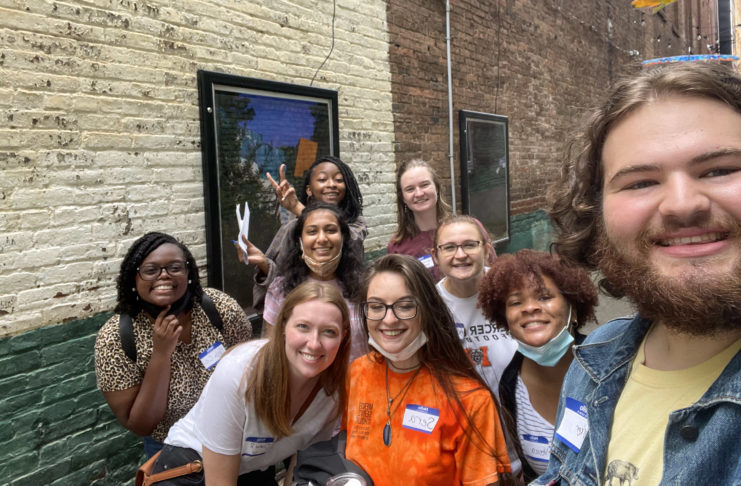
Mercer’s Sex Trafficking Opposition Project began in Dr. Silver’s first-year seminar class. While writing research essays on contemporary ethics and justice, students started asking questions about the many spas and spa billboards dotting Macon’s landscape. They soon joined ranks with members of Baptist Collegiate Ministries and Dr. Morgan’s women’s and gender studies class. The students formed Middle Georgia’s first anti-trafficking group to raise awareness about sex trafficking. In the spring of 2009, STOP organized a conference for the region held on Mercer’s Macon campus that was attended by more than 900 people. The students’ research helped spur their activism and made it more effective, a fact that did not go unnoticed by the council, Dr. Morgan said.

Hannah Vann

Sarah Hedgis, CLA ’09
The efforts and the STOP conference have garnered significant attention for Mercer, and for the students who organized it, including Vann and Hedgis, who was presented the Algernon Sydney Sullivan Award at the 2009 commencement, in part for her efforts with the conference. On March 4, Vann was honored for outstanding student contributions to service-learning during the annual Gulf-South Summit on Service-Learning and Civic Engagement through Higher Education at the University of Georgia.
“When the Director of the Council on Undergraduate Research first approached us about presenting a plenary session on STOP’s research and activism around sex trafficking, she said the council wanted to highlight the relevance of undergraduate research to meeting community needs, whether community was defined locally or globally,” Dr. Morgan said.
The Council on Undergraduate Research is a national organization of individual and institutional members representing more than 900 colleges and universities that support and promote high-quality undergraduate student-faculty collaborative research and scholarship. This year’s national conference, titled “Undergraduate Research as Transformative Practice: Developing Leaders and Solutions for a Better Society,” is themed around activism and will bring together faculty, administrators, policy makers, representatives of funding agencies and other stakeholders with an interest in doing and promoting undergraduate research.
Mercer students’ activism required a tremendous amount of research across a broad spectrum of disciplines, and that research strengthened the students’ activism, Dr. Morgan said. In addition to conducting research, students also learned how “to translate their findings into compelling public presentations and raise awareness about international and domestic trafficking,” she said. Now, Dr. Silver and Dr. Morgan hope to share their students’ experiences with other universities to help their students to effect change in their communities.
“These students’ research activities range from calculating per capita numbers of spas in Macon compared to other cities in the nation to qualitative research concerning racial differences in attitudes about trafficking,” Dr. Morgan said. “We hope to share our experience that good research helps make good activism, and that their students will go on to change their communities as ours have.”